The One Ton Genome Project

Help sequence the genomes of the world's largest fruit

About

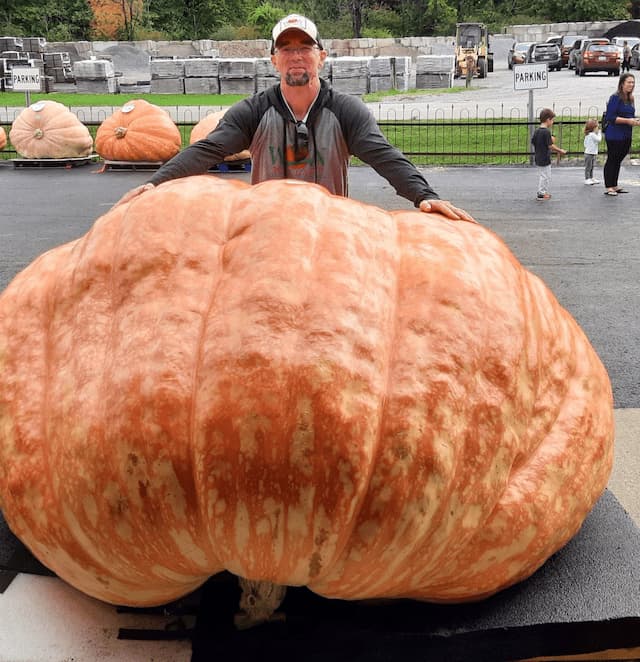
For decades, giant pumpkin growers have pushed plant breeding to its limits. Some pumpkins now weigh over 2,800 pounds. We're sequencing the genomes of these record-breaking pumpkins to understand the genetics behind the giants.

This research is conducted through the University of New Hampshire Cucurbit Breeding & Genetics Program .

*Donors contributing $500 or more can send a seed of their choice to be sequenced, giving them a unique glimpse into their pumpkin’s DNA.

Why study giant pumpkins?

Believing that it is always best to study some special group, I have, after deliberation, taken up domestic pigeons.

Charles Darwin, On the Origin of Species

Scientific insight often comes from unexpected places. Giant pumpkins are extraordinary examples of human-driven evolution through artificial selection. Over the past fifty years, growers have carefully bred and saved seeds from their largest fruits, increasing pumpkin size from a few hundred pounds to well over a metric ton and dramatically altering plant growth traits.

Previous scientific studies have identified genetic differences between large and small-fruited pumpkins, but have not examined diversity within the competitive lineages maintained by giant pumpkin growers.

Unlike studies of ancient domestication, competitive giant pumpkin lineages are exceptionally well documented: pedigrees are recorded and seeds from record-breaking fruits preserved. This creates a rare opportunity to study evolution under strong directional selection. By sequencing the DNA of historic and modern lines from growers, we can track the genetic changes behind the quest to grow the largest fruit on Earth. Standing on the shoulders of these giants, we can also gain insight into the evolutionary process that gave rise to all of our domestic plants and animals.

What do we hope to learn?

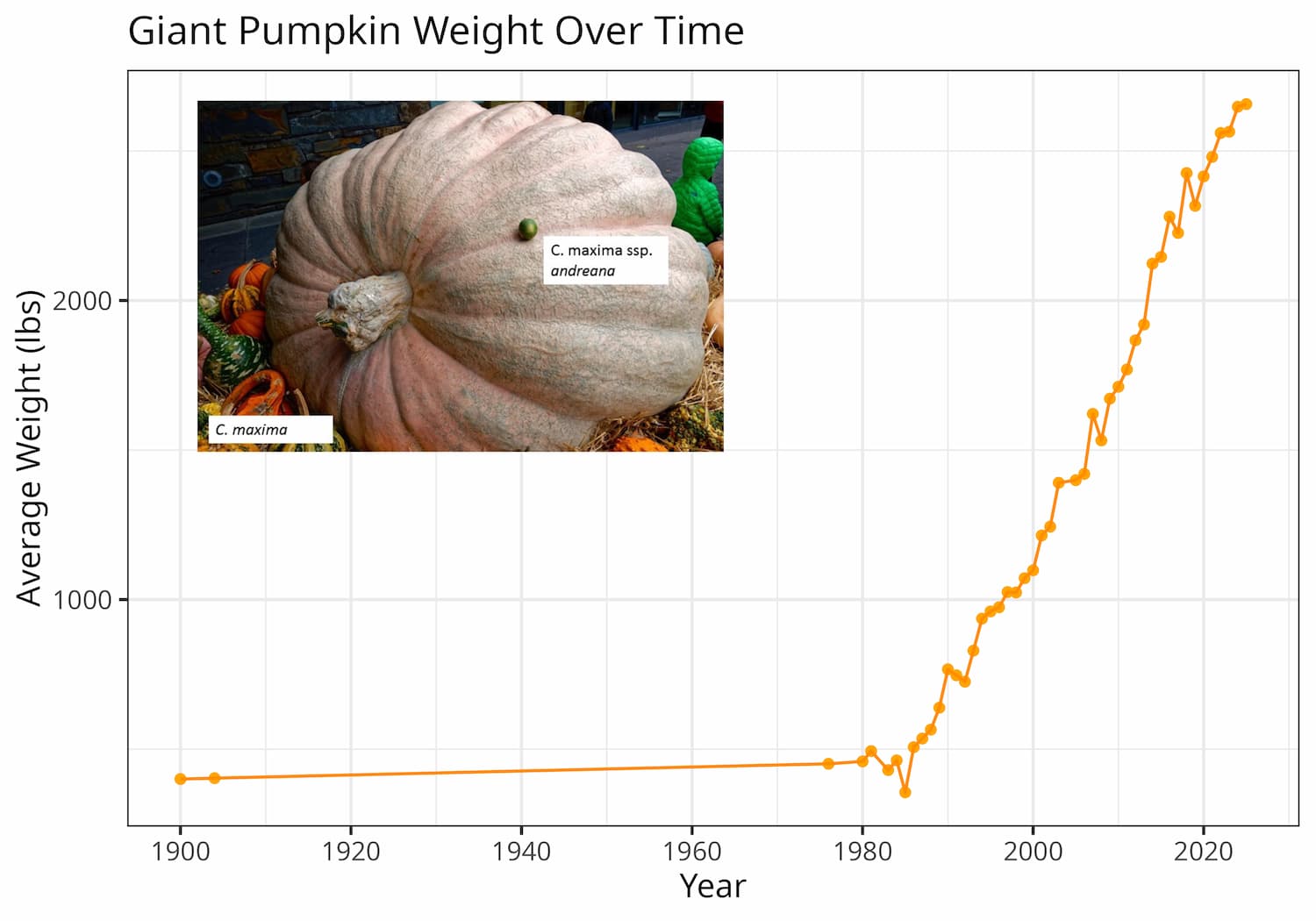
Illustration of giant pumpkin gains
Average weight of the top five pumpkins at weigh-offs has increased dramatically over time. The inset compares a modern giant pumpkin with its much smaller wild ancestor. This remarkable response to decades of selective breeding raises a fundamental question: what genetic changes have allowed for the increase in fruit size?

By sequencing the DNA of historic and modern giant pumpkin lines, we hope to better understand the genetics behind decades of successful selection by growers. In particular, we aim to learn:

Although this project focuses on giant pumpkins, the insights gained will help scientists better understand how selection reshapes genomes and drives the evolution of extreme traits.

How will funds be used?

Every $100 sequences another pumpkin genome.

Our goal is to sequence at least 96 giant pumpkin genomes. The cost per genome is approximately $100, which covers DNA extraction, library preparation, and sequencing. A breakdown is shown below.

Item Cost per Sample Number of Samples Total Cost
DNA Extraction and Labor $12.16 96 $1,168
Library Preparation $42 96 $4,032
Sequencing $50 96 $4,800
Total $10,000

Stretch Goals

Team

Christopher Hernandez

Christopher Hernandez

Principal Investigator and Assistant Professor of Plant Breeding leading the University of New Hampshire Cucurbit Breeding & Genetics Program. Chris got interested in genetics through the giant pumpkin hobby.

Andy Wolf

Andy Wolf

Andy Wolf has been growing giant pumpkins since 1999 in Little Valley, New York. He has generously shared his expertise and provided historic seeds and guidance to support the One Ton Genome Project.

Support the Project

*Donors contributing $500 or more can send a seed of their choice to be sequenced, giving them a unique glimpse into their pumpkin’s DNA.

Your contribution helps fund DNA sequencing, analysis, and research into the world’s largest pumpkins.

Online: Click the button below to donate online.

By Check: Make your check out to UNH Foundation and mail it to:
UNH Foundation
9 Edgewood Road
Durham, NH 03824
In the memo or note, please write: Cucurbit Breeding Gift Fund (GF000349)